How a Tumblr Mood Board Became a Global Brand (and Almost Didn’t)

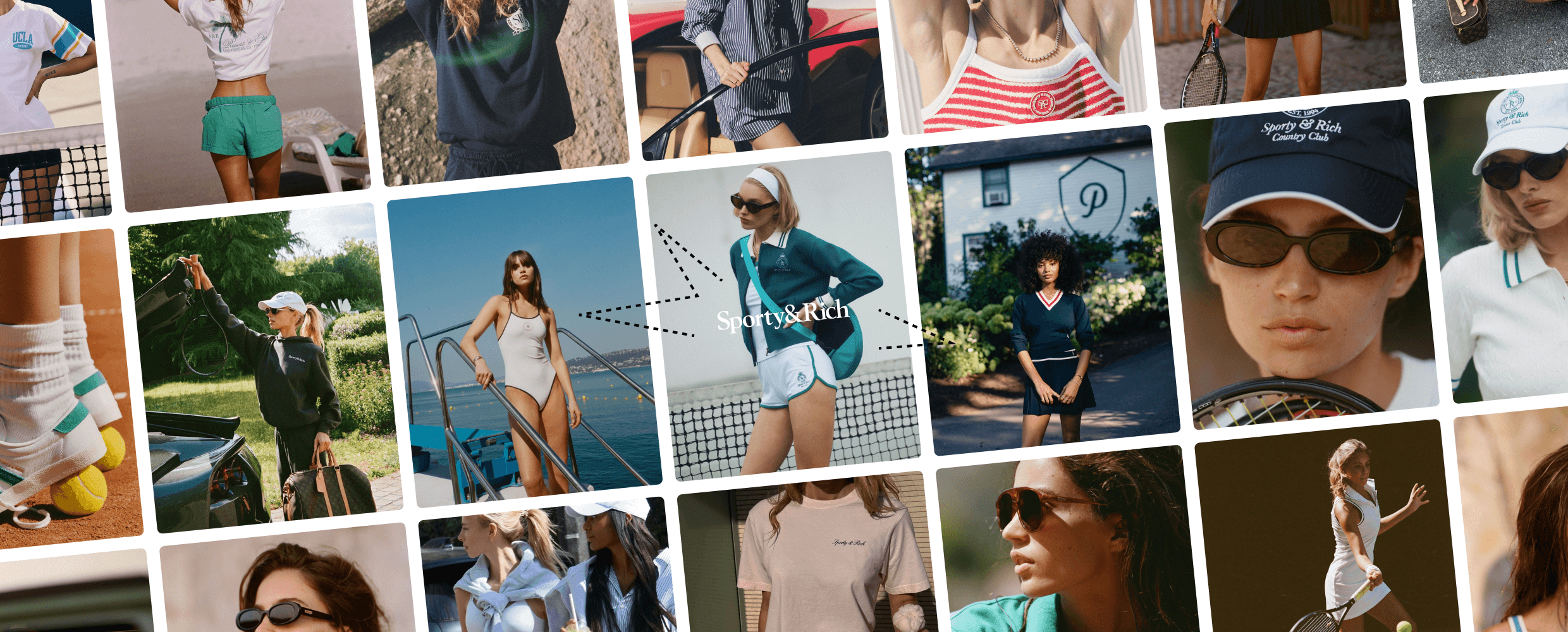
In 2014, Emily Oberg, living in New York and working at Complex Magazine, pinned two photos above her desk - a "Phoebe Philo era" of a Céline campaign and a 1990s shot of Michael Jordan. Sport and luxury. Practical and aspirational. The tension between those two worlds would become the blueprint for what she later called Sporty & Rich, one of the decade’s most influential “merch” stories.
The brand began as an Instagram archive of vintage athletic imagery, ‘90s muses, and wellness quotes, a personal curation of everything Oberg found beautiful. It evolved into a print magazine, then into a small batch of embroidered tees.
Ten years on, that side hustle grew into a $30 million lifestyle brand, complete with a SoHo flagship offering facials, massages, and smoothies, and collaborations with names like Adidas and Le Bristol Paris.
The path from mood board to global brand was anything but effortless. Behind the calm exterior of Sporty & Rich lay years of trial, error, and reinvention, lessons that would quietly define its success.
The Early Days of Sporty & Rich
“I started Sporty & Rich because I wanted to have something outside of my day job that I did just for me,” Emily Oberg wrote in her Emily Loves Substack. “In New York, there’s this feeling like you’re never doing enough. Time is incredibly valuable, and I’ve always been intentional not to waste it. So I tried to do as many things as I could. I had my day job, I DJ’d on the weekends, and I did S&R at night and in my free time.”
The first version of S&R was a print magazine which was self-funded, written and produced entirely by Oberg. “Even though the magazine was somewhat profitable, it became too time-consuming. I never got to the point of getting advertisers. After issue number four, I decided to give it a rest.”
The energy she poured into the brand didn’t disappear, it simply took on the form of merch. “I began selling some apparel, but on a very small scale,” she describes. “I would go to Modell’s in Tribeca and buy blank Russell Athletic t-shirts and crewnecks. I’d then bring them to this very sketchy place in Chinatown where an unfriendly older man would embroider them for me. I’d lug them back up to midtown (where the Complex office was) and ship them out from my desk.”
In those early days, she would sneak into her office at 7am to print shipping labels before anyone would notice. “I wasn’t consistent with it, but I did sell out of the 20 or so pieces I would make at a time.”
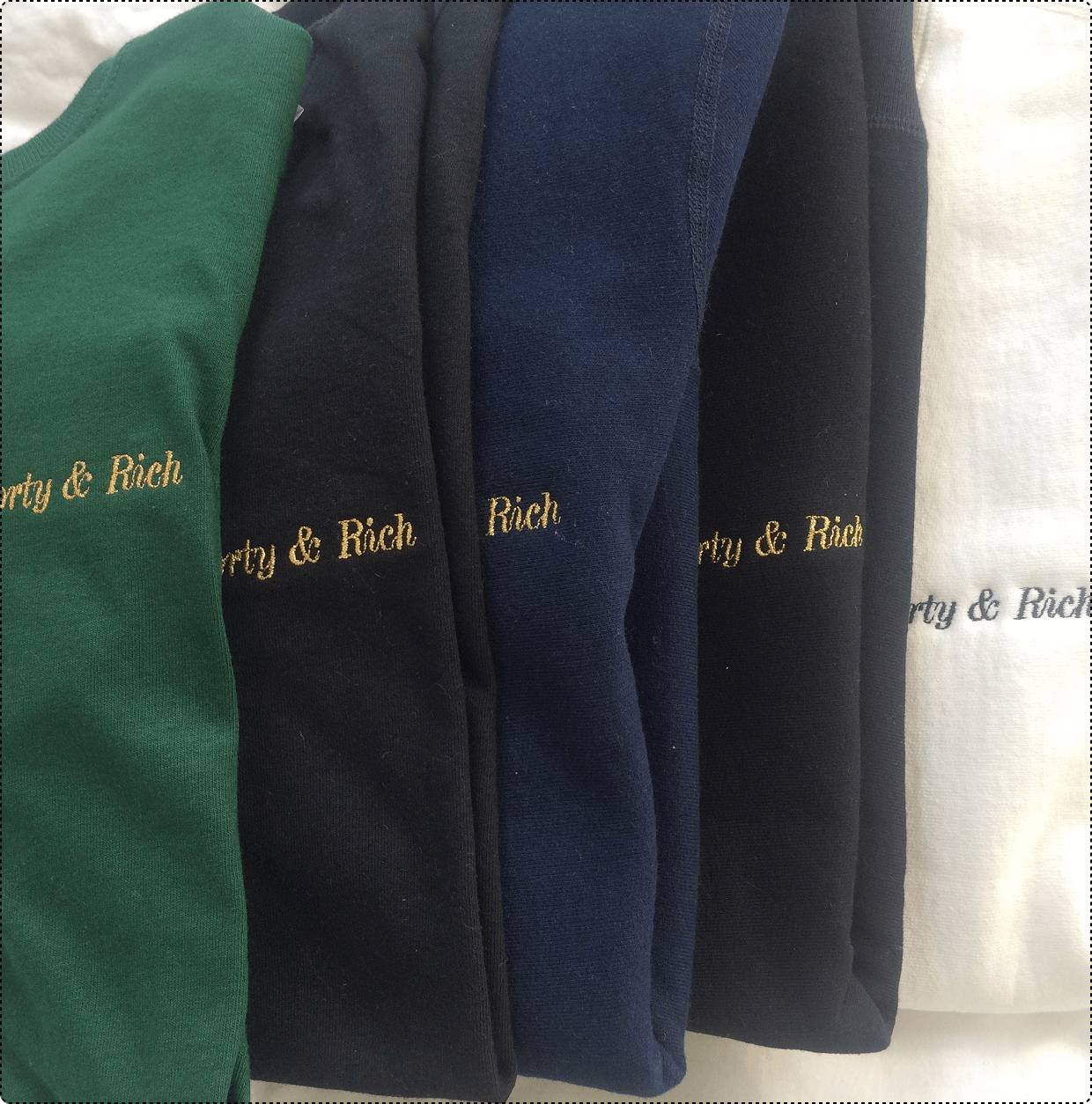
“I wasn’t consistent with it, but I did sell out of the 20 or so pieces I would make at a time.”
- Emily Oberg
Learning the Craft
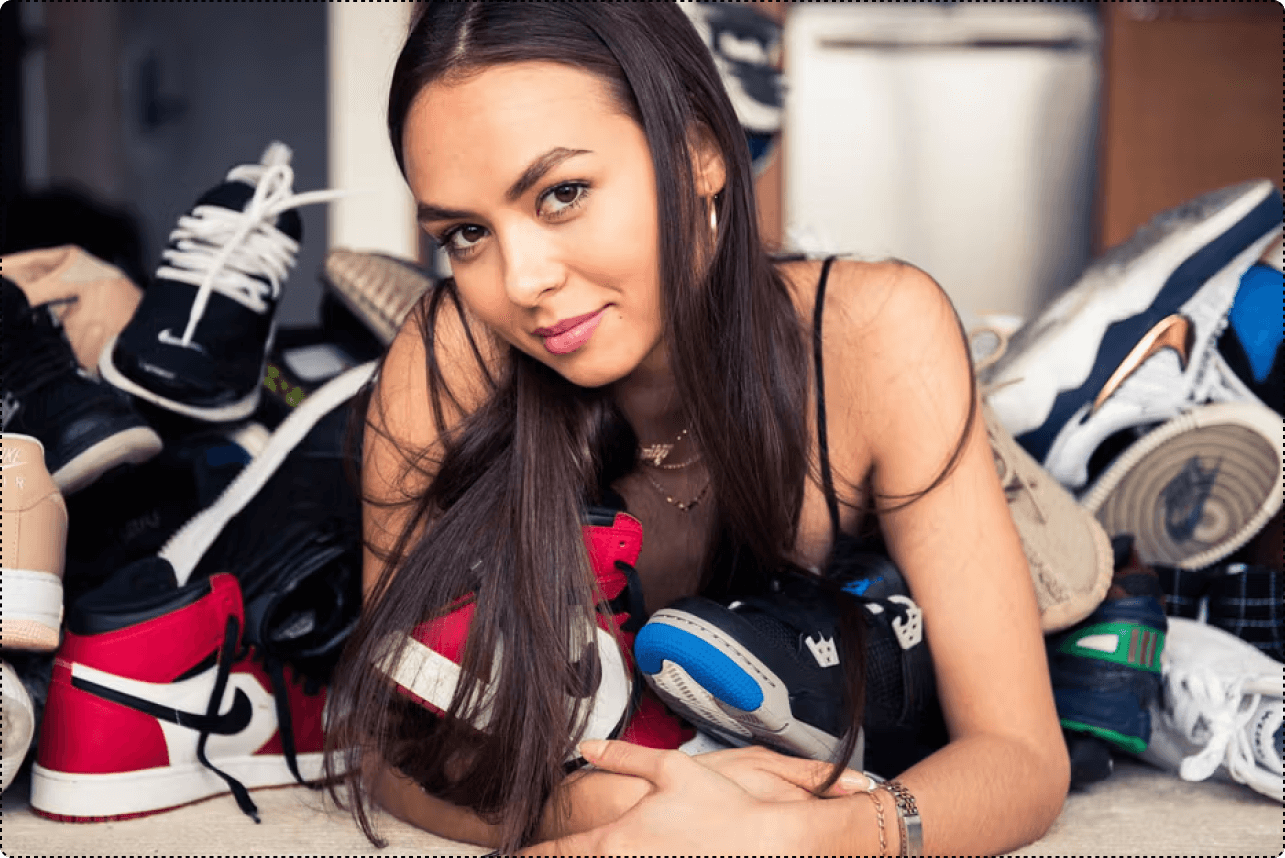
By 2016, she’d been at Complex for two years and started to feel ready for something new. When she joined Kith as Creative Lead of Womenswear, it felt like everything she’d been working toward. “At the time, it was truly my dream job and I felt like I was on cloud nine,” she recalled.
“When I started at both Complex and Kith, I had no idea what I was doing. I remember my first few months at Complex were huge learning curves and pretty stressful. I struggled a lot and I knew that if I didn’t figure it out quickly, my ass would be on the first plane back to Canada. Moving back wasn’t an option for me, so I figured it out and turned a corner.”
Kith became her crash course in fashion production.
“I got to see what running a real brand was like, how to work with a team of 30+ people, choose fabrics and trims, oversee an ecomm shoot, collaborate with other brands, work on a fashion show and so many other things.”
It was a masterclass in design-to-delivery, an experience that would become the foundation for S&R’s second act.
Launching a Brand
Paris-based designer David Obadia, was the one who encouraged Oberg to take S&R seriously. “We made the perfect team for building a brand,” she said. “He knew about everything that I didn’t; production, wholesale, product and design.” Whereas Oberg brought creative and marketing expertise.
“For the first year or so, we did everything ourselves. I found a factory in LA. I did a few photoshoots for super cheap. We launched the brand on a pre-order basis because we didn’t have money to buy inventory ahead of time.”
The pre-order model can be a lifeline for emerging brands; cash up front, no unsold stock, proof of demand before production. As Oberg put it, “This is the best way to start if you don’t have any money, but you can only do it for so long. You also need to make sure there are no delays with the factory, otherwise it can quickly turn into a customer service nightmare - and it did for us.”
Scaling the Hard Way
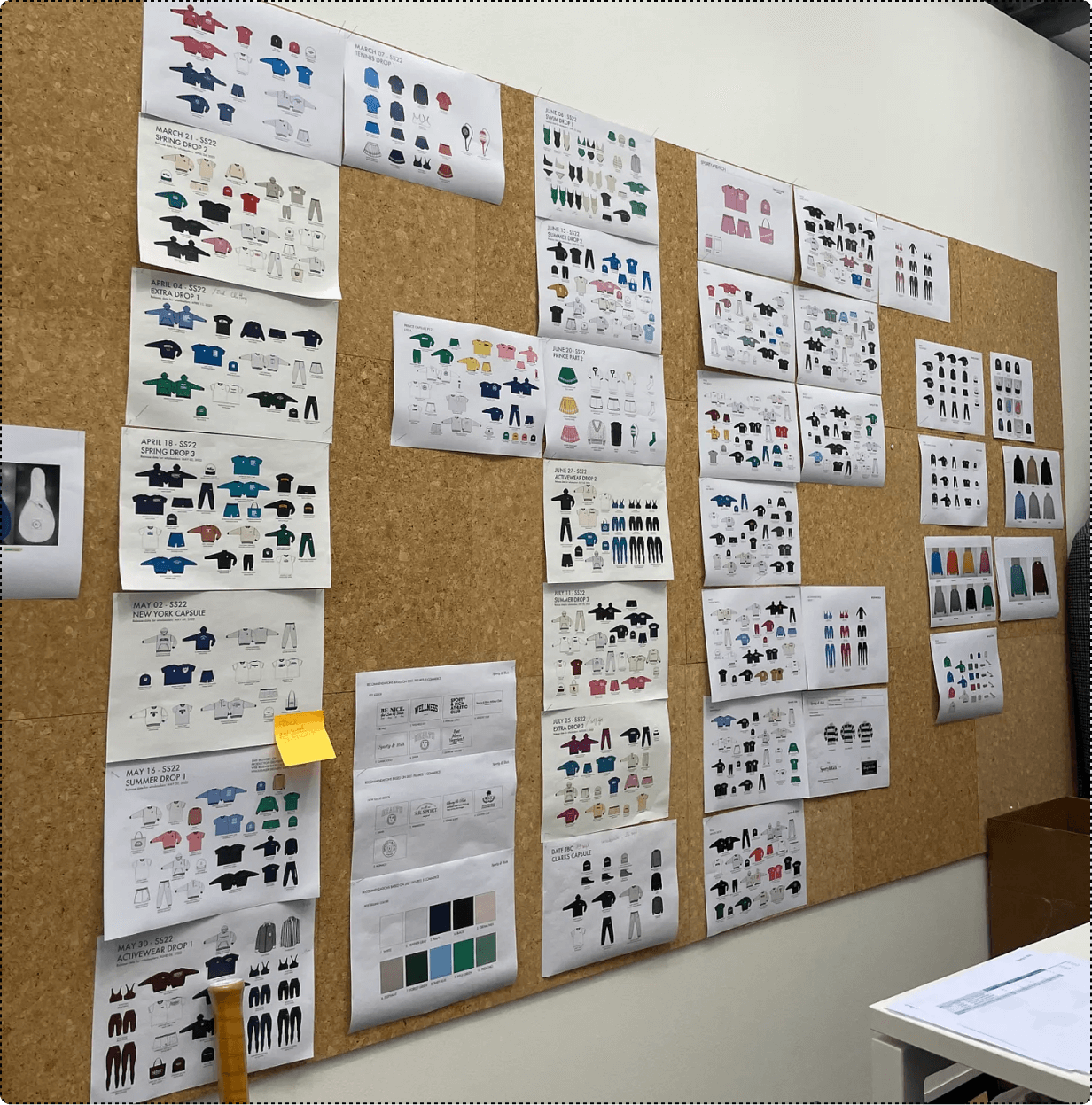
At the beginning of Covid, those limitations hit hard. “We got around $600,000 worth of orders in one day - this was like 20 times more volume than we had been doing prior to that. I was both shocked and excited, but I quickly realized we were not at all set up to take on that many orders.”
The next few weeks were a blur of missing packages, late shipments and one memorable production mishap involving red-ink labels that bled in the wash.
As the orders piled up, so did the DMs. “We were bombarded with hundreds of messages and comments every day,” she recalled. “I definitely said a few things I probably shouldn’t have.”
She laughs about it now, but the stress was real. “Pro tip,” she wrote later, “don’t do your own customer service when you’re also in charge of every other aspect of your company and have a bit of a temper.”
That moment became a wake-up call. “It was clear we couldn’t keep operating this way,” she said. “We had to stop the pre-order model, change factories, hire someone for customer service and actually set up the back end of the company properly.”
“I just knew that if we didn’t get our shit together, we wouldn’t survive,” she said. “It happens more than you’d think - brands grow at an unexpected rapid pace and can’t keep up with their growth.” S&R almost didn’t, until it did.
From Surviving to Scaling
Oberg and her team brought in software to manage inventory, expenses, and orders - the operational backbone they’d been missing. It gave the brand something it hadn’t had before: structure.
With process came progress. Production expanded, new hires followed and S&R began wholesaling to global retailers - more than 120 accounts across Los Angeles, Paris, and Seoul.
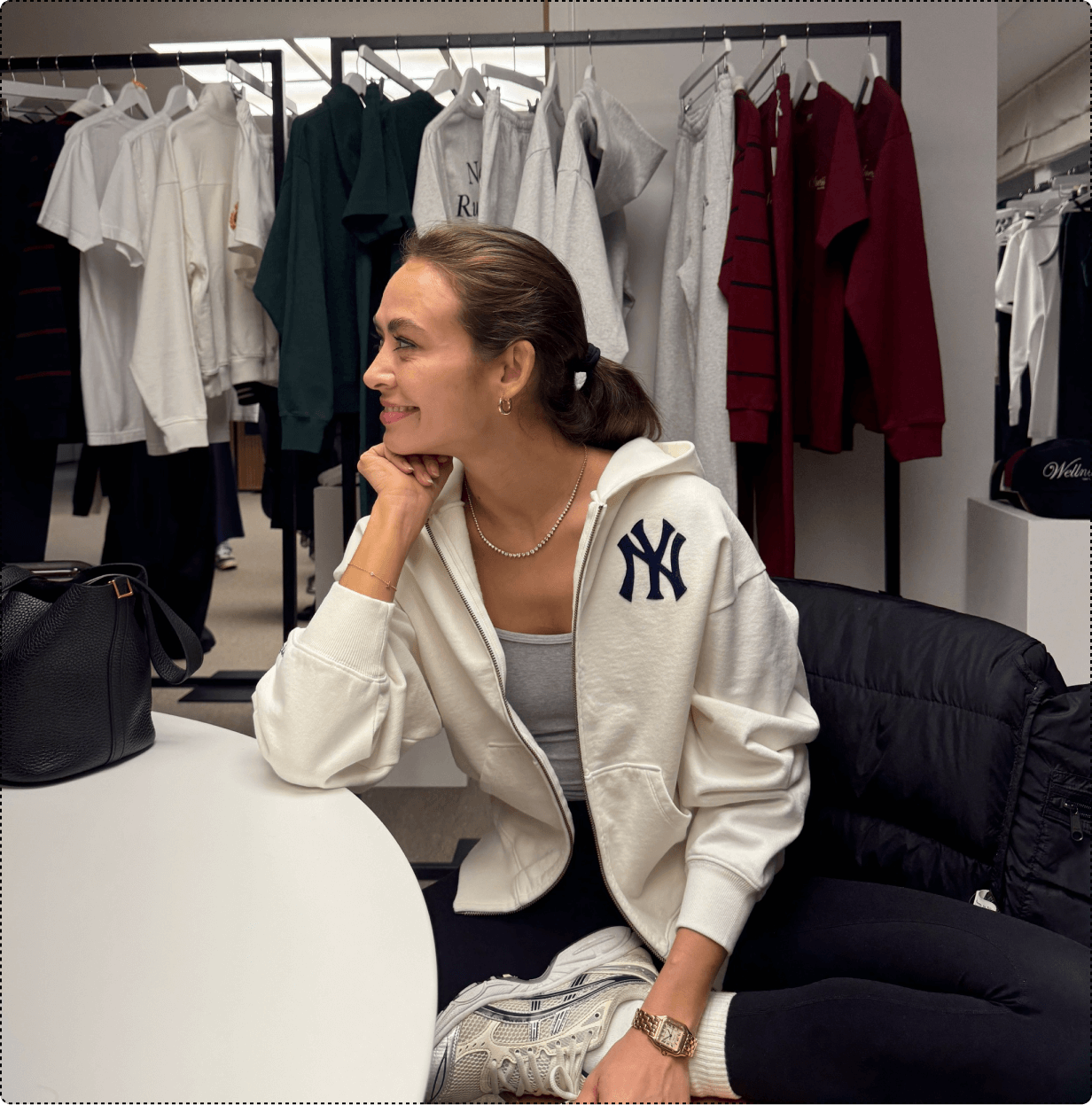
Oberg handled the creative core - image, campaigns, design, and strategy - while a small but capable team managed the rest. “It started to become a real business,” she said. “I remember having so many pinch me moments, and still do.”
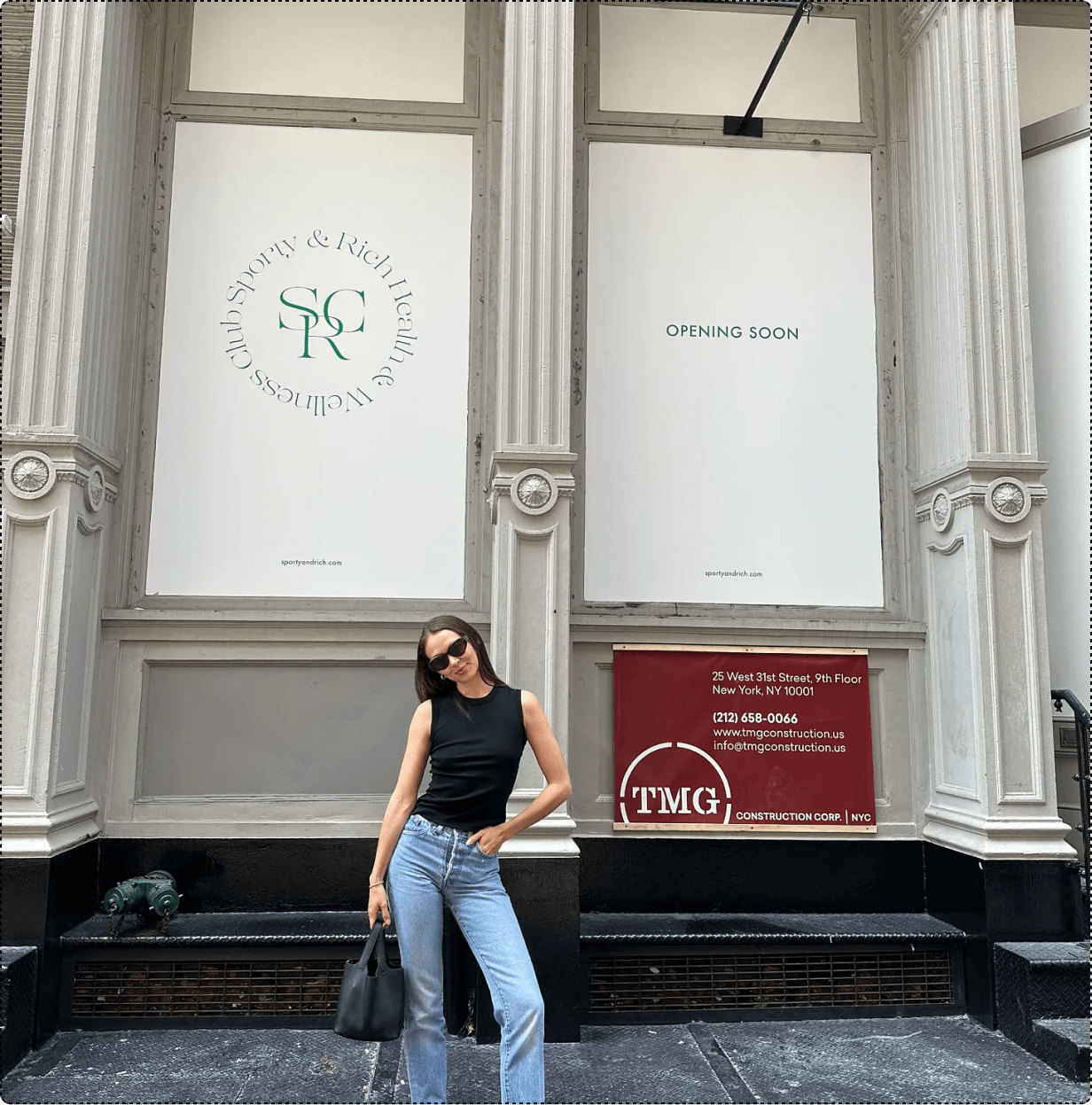
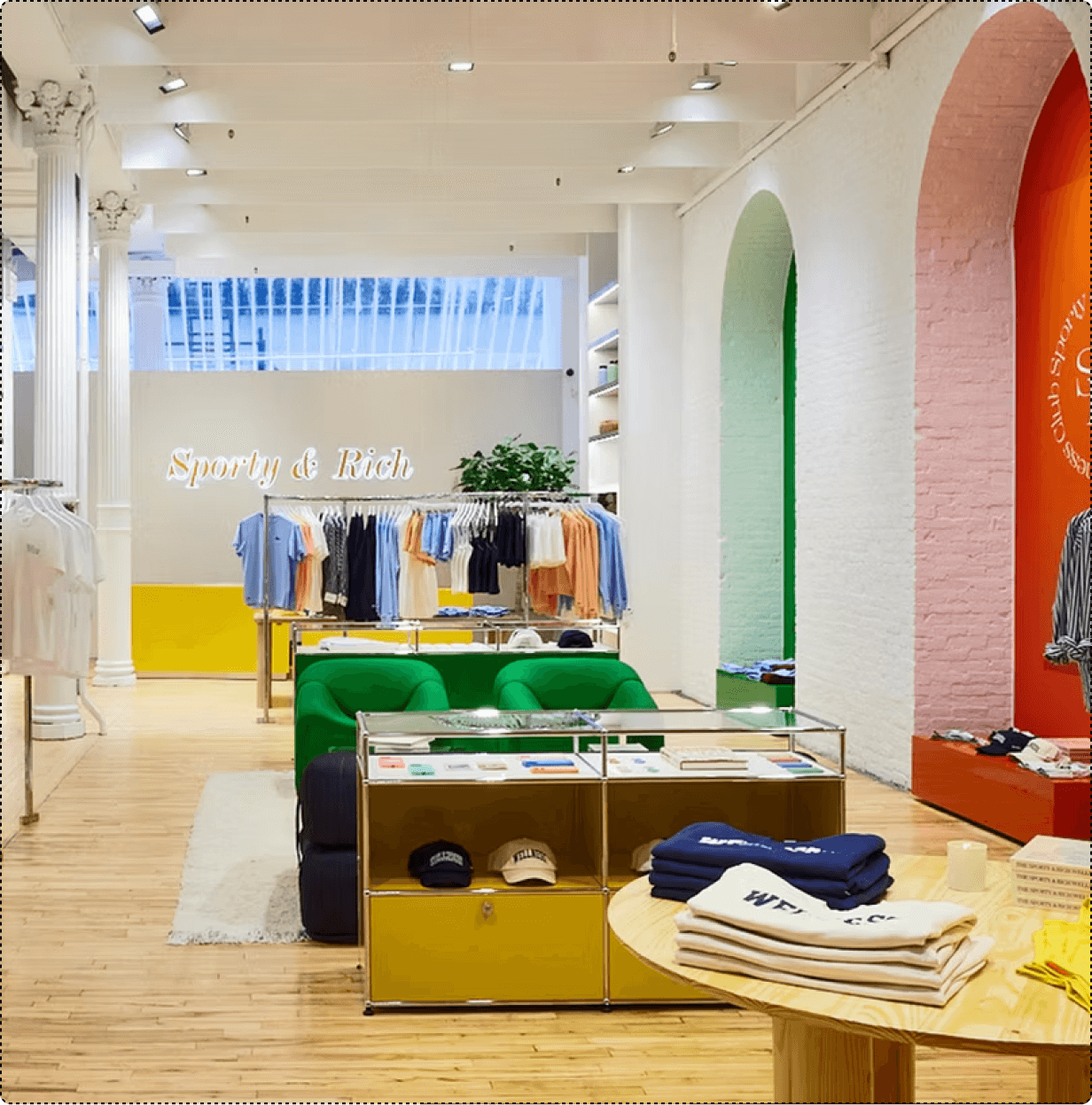
Those moments multiplied. S&R opened its flagship in SoHo, a 3,600-square-foot space that feels more wellness retreat than retail store, complete with a juice bar, spa and gym. Collaborations with Adidas, Le Bristol Paris and Hotel du Cap-Eden-Roc followed, merging sportswear and quiet luxury that was synonymous with the brand from day one.
Despite the scale, her philosophy hasn’t changed.
“I feel what I’ve done well is to have a clear vision of what this brand is and what I wanted it to be,” she said. “It’s much easier to pursue a dream when you know exactly what that dream looks and feels like. And while the brand has evolved, the goal has always remained the same - to create something that feels true to who I am, to make products I want to own, to create images that excite and inspire me, and to maintain an unbridled state of happiness by doing what I love.”
Lessons for Designers
- Oberg’s story isn’t just about scaling a cult brand - it’s about what happens in between: the messy middle where creativity meets logistics, taste meets timelines, and passion meets process. For founders building in 2025, her journey is both a blueprint and a reminder that vision will get you started and structure will keep you growing.
- Start scrappy: S&R's first embroidered tees were stitched in Chinatown and shipped from her desk. Perfection didn’t matter - momentum did.
Learn by doing: What Oberg learned on the job - sourcing, production, deadlines - now lives online. Tap into digital tools, communities, and mentors instead of waiting for experience to find you. - Validate before you scale: Pre-orders funded S&R before it ever had inventory. Test the demand, build trust, then grow.
- Add structure before you need it: When Oberg built systems around her creativity, everything clicked. Structure doesn’t limit you; it protects the parts that matter most.
- Get help when it counts: When growth hits, burnout follows. Bring in freelancers, contractors, or partners who can take work off your plate so you can focus on what you do best.
- Stay on brand: Every opportunity will test your identity. S&R stayed distinct because its visuals, tone and values never wavered. Consistency is what turns a product into a brand.
Do it with Fabra
Fabra lets you start small and scale smart. Test an idea, build your brand identity through custom prints, and bring your vision to life without the production headaches.
From templates to automated tech packs, Fabra turns your creative energy into a finished product.